
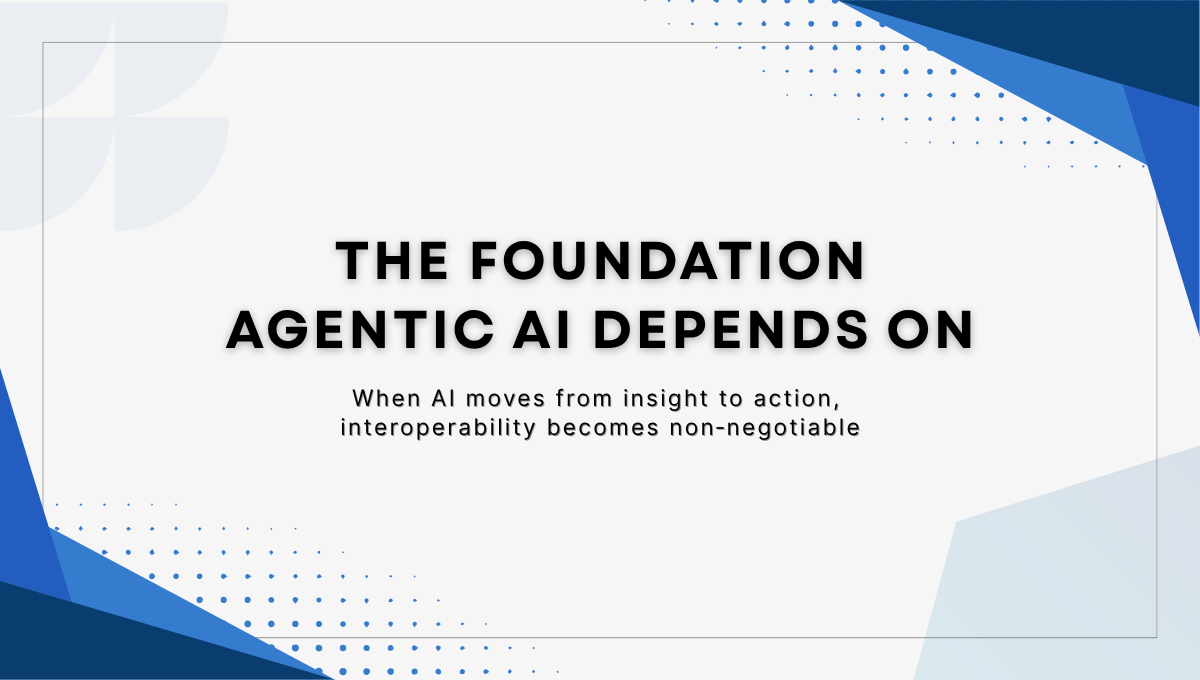
At HIMSS 2026, agentic AI took center stage. These systems go beyond analyzing or suggesting; they observe, decide, and act on their own across clinical, financial, and operational workflows. In our recent article, we looked at agentic AI and why strong governance is so important as these agents start working at scale.
No matter how advanced agentic AI gets, its real impact depends on how well healthcare systems connect, share information, and work together. This article explains why interoperability is now an organization-wide priority, not just a technical project, for leaders who want to scale agentic AI responsibly.
The Interoperability Gap Agentic AI Exposes
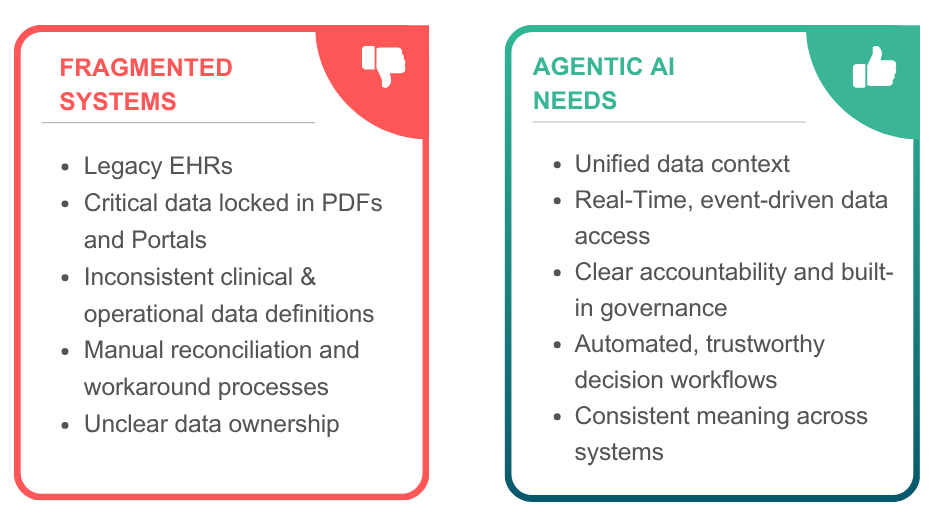
Interoperability, or the ability for healthcare systems to exchange and use patient data effectively, is still a major challenge in healthcare IT. Even when data is technically shared, it is often fragmented, labeled inconsistently, or stuck in formats like PDFs or portals that make it hard to use.
People can often find ways to work around these data gaps, but agentic AI systems cannot. They need smooth, timely, and standardized data to make good decisions and take action. For example, an AI agent handling care transitions needs real-time access to full records to coordinate follow-up care, check insurance, and share instructions. If information is missing, outdated, or incomplete, mistakes and delays can happen, which hurts trust in the whole project. That’s why interoperability is key to unlocking AI-driven improvements in diagnosis, personalized care, and patient outcomes.
Interoperability as a Strategic Advantage
At HIMSS 2026, it became clear that interoperability is a real strategic advantage for organizations that are serious about agentic AI.
The real value is not just moving data between systems, but making sure it is trustworthy, relevant, and easy to access throughout care. When agentic AI can act on unified data, it becomes more than just a helpful assistant—it can manage complex workflows effectively.
Organizations with strong interoperability can lower administrative costs, improve revenue cycle efficiency, boost care quality, and work more closely with payers. On the other hand, those that see interoperability as just another IT task risk limiting their AI’s impact because important data stays stuck in silos.

What AI-Ready Interoperability Looks Like in Practice
AI-ready interoperability is more than just exchanging data. It means agentic AI can get accurate, relevant, and timely information from across the healthcare system and use it confidently.
Instead of measuring progress by the number of interfaces, organizations should focus on three practical abilities:
- Clear and consistent meaning: Information should be understood the same way everywhere. For example, a diagnosis, allergy, or risk factor should mean the same thing to every system and every AI agent.
- Real-time availability: Agentic workflows need up-to-date data to work well. Delays or manual fixes slow things down and require people to step in.
- Trusted governance: Clear rules should define who can access data, how it is used, and who is responsible. This builds trust and manages risk as automation increases.
When these capabilities are in place, complex workflows run smoothly with little manual work. For example, after a patient leaves the hospital, an AI agent can automatically gather clinical notes, medication history, and lab results from various sources, verify insurance coverage, schedule follow-up care, and notify both the patient and their doctor, all while ensuring data security and compliance.
Organizations that achieve this level get a complete view of each patient, which helps with more accurate diagnoses, personalized treatments, and proactive care. This leads to faster AI rollouts, fewer mistakes from missing data, and much better returns on AI investments.
Making Interoperability a Strategic Priority
The message from HIMSS 2026 was clear: agentic AI is now a practical reality, not just a promise. Its success depends on having a strong foundation of interoperability.
Healthcare leaders now have a clear choice: keep seeing interoperability as just another IT project or make it a top priority across the whole organization. Looking at workflows where agentic AI can make an immediate difference—like prior authorization, care coordination, medication reconciliation, and closing care gaps—is an important next step.
Organizations that do this will be better able to move from small AI tests to real, scalable value. They can turn healthcare data into real improvements in outcomes, efficiency, and patient experience, while also lowering risk.
At VNB Health, we help organizations assess their interoperability and build strong, AI-ready data foundations. Whether you are just starting out or want to speed up your current efforts, our team offers practical strategies and solutions to make interoperability your competitive edge.